Best Smart Light Bulbs 2026: 4 Picks With and Without a Hub
Four smart bulbs for 2026: a whole-home system, a bright no-hub Matter bulb, a budget color bulb and a white-only pick, plus who should skip each.
By The In My Home Products Editorial Team
Published · Updated · 6 min read
We may earn a commission when you buy through links on this page. As an Amazon Associate, we earn from qualifying purchases. How we make money.

The short answer
- 1For a whole-home system you'll grow over time, get the Philips Hue White and Color A19: up to 1,100 lumens, a very wide white range, Bluetooth to start and a Hue Bridge for Matter, Apple Home and up to 50 lights.
- 2If you don't want a hub, the Tapo L535E is the bright pick: 1,100 lumens, CRI 90+ and Matter over Wi-Fi, so it works in Apple Home, Alexa and Google Home with no bridge.
- 3On a budget, the WiZ Color A19 adds color to lamps and bedrooms for very little, and the WiZ Tunable White A19 is the cheapest way to shift from warm to daylight white.
Our top picks
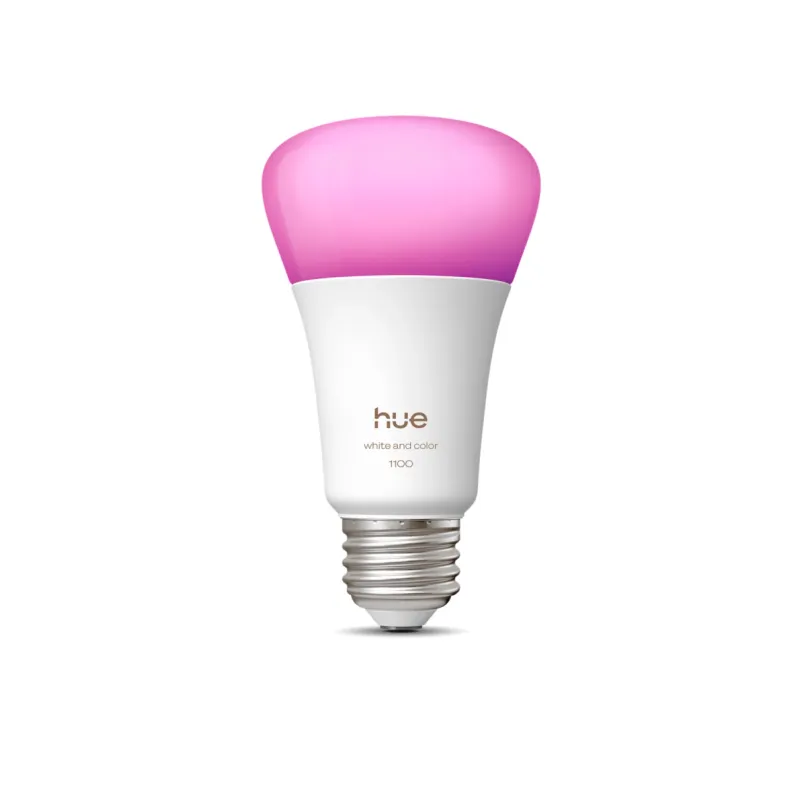
Best overall system
Philips Hue White and Color Ambiance A19 E26 Smart Bulb (75W equivalent, 1100 lumens)Whole-home lighting you'll expand over time
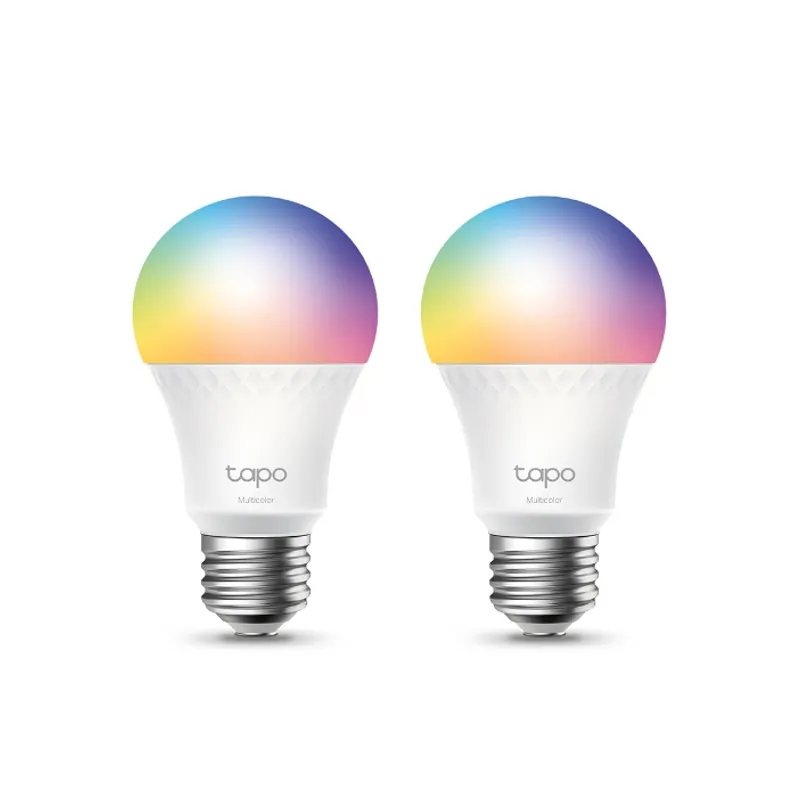
Best no-hub Matter bulb
Tapo L535E Matter Smart Wi-Fi Light Bulb, Multicolor (75W equivalent, 1100 lumens, 2-pack)Bright color light in Apple Home, Alexa or Google Home
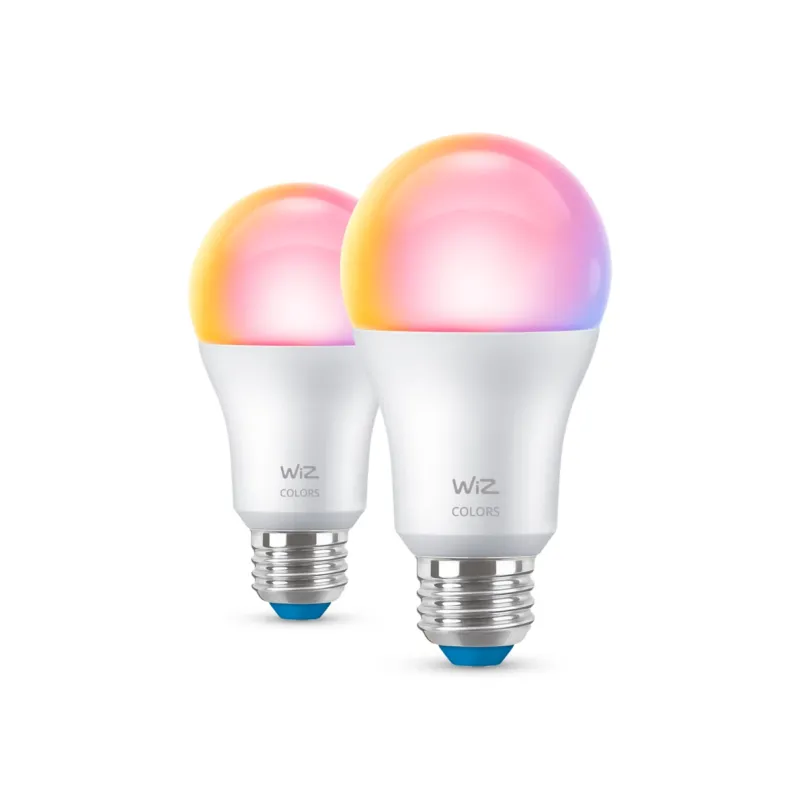
Best budget color
WiZ Color A19 E26 Smart Wi-Fi Bulb (60W equivalent, 2-pack)Lamps, bedrooms and kids' rooms
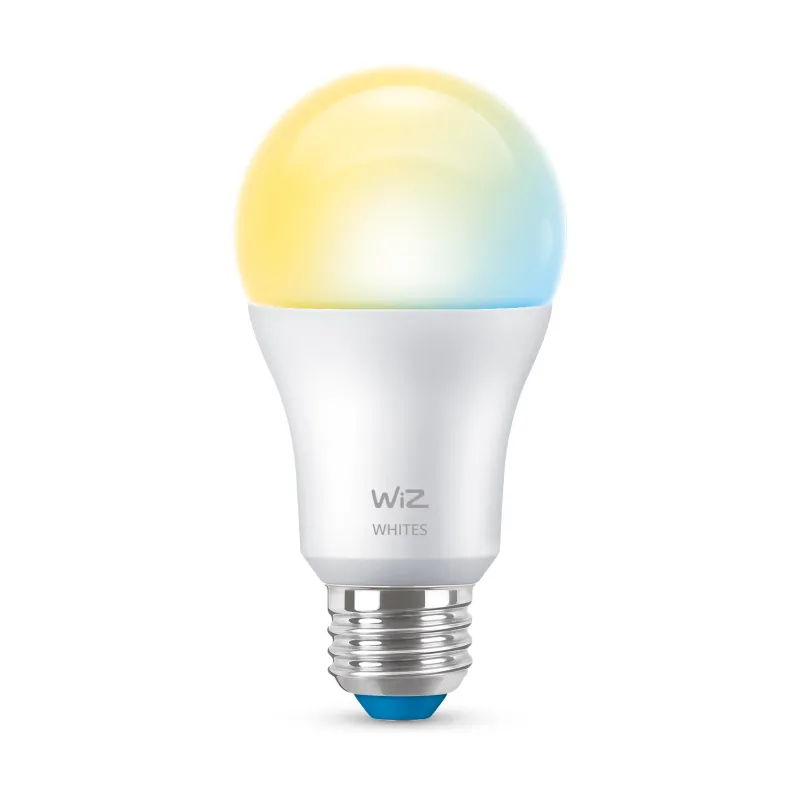
Best white-only
WiZ Tunable White A19 E26 Smart Wi-Fi Bulb (60W equivalent)Bedrooms, offices and kitchens that need good white light
Smart bulbs are the easiest smart home upgrade there is. You screw one in, open an app, and suddenly your lamp turns on at sunset, dims at bedtime or glows orange for the holidays. The hard part is picking a system: a hub-based setup like Philips Hue, a Wi-Fi bulb that works on its own, or a bulb that speaks Matter so it fits any phone or speaker.
We compared official listings for current A19 smart bulbs from Philips Hue, TP-Link Tapo, WiZ, GE Cync, Nanoleaf and LIFX and analyzed long-term owner feedback on setup, connection reliability and light quality. If you'd rather keep your current bulbs and automate the lamp itself, see our best smart plugs.
How we chose
We started with standard A19 bulbs with an E26 base, the size that fits most lamps and ceiling fixtures. Then we weighed brightness (lumens), light quality (color range and CRI), how each bulb connects (Bluetooth, Zigbee or Wi-Fi), whether it needs a hub, and whether it supports Matter. Each pick has a clear role, from a system you build room by room to the cheapest bulb that changes from warm to cool white.
| Model | Philips Hue White and Color A19 | Tapo L535E | WiZ Color A19 | WiZ Tunable White A19 |
|---|---|---|---|---|
| Our score | 8.4/10 | 8.3/10 | 7.9/10 | 8.1/10 |
| Price tier | $$ (Mid-range) | $ (Budget) | $ (Budget) | $ (Budget) |
| Brightness | Up to 1,100 lumens (75 W equivalent), 9.5 W | 1,100 lumens (75 W equivalent), 9.5 W max | 800 lumens (60 W equivalent), 8.8 W | 800 lumens (60 W equivalent), 8.8 W |
| Light range | Color plus warm-to-cool white; full-spectrum white listed as 1000–20000K | Millions of colors plus tunable white, 2500–6500K | Full color plus tunable white, 2200–6500K | Tunable white only, 2700–6500K (no color) |
| Connectivity | Bluetooth and Zigbee; works without Wi-Fi | 2.4 GHz Wi-Fi only (802.11b/g/n); Bluetooth for setup only | Wi-Fi (2.4 GHz, 802.11b/g/n) and Bluetooth | Wi-Fi (2.4 GHz, 802.11b/g/n) and Bluetooth |
| Hub | Optional. Bluetooth app controls up to 10 lights in one room; a Hue Bridge adds remote access, advanced automations, up to 50 lights, and Matter and Apple HomeKit support | No hub required (a hub is only needed for Tapo buttons and sensors) | Not needed: connects straight to your Wi-Fi | Not needed: no hub or gateway to install |
| Rated life | 25,000 hours nominal; 50,000 switch cycles | 25,000 hours; 15,000 switching cycles | 25,000 hours (WiZ lists about 25 years at 2.7 hours a day); 50,000 switch cycles | 25,000 hours (WiZ lists about 25 years at 2.7 hours a day); 50,000 switch cycles |
| Best for | Anyone building a whole-home lighting system they will expand over time | Anyone who wants a bright, no-hub Matter color bulb at a fair price | Budget color lighting for bedrooms, lamps and kids' rooms | Bedrooms, offices and kitchens where you want good white light, not color |
The best smart light bulbs, ranked
1. Best overall system
Philips Hue White and Color Ambiance A19 E26 Smart Bulb (75W equivalent, 1100 lumens)

Best for: Anyone building a whole-home lighting system they will expand over time
Skip it if: You only want one or two colored lamps and don't want to buy a hub
What owners like
- Owners frequently mention rich, accurate colors and smooth dimming
- Many say the Hue app and the Bridge make whole-home routines dependable
- Owners often cite long-lasting bulbs that keep working after years of daily use
Watch out for
- The price per bulb is the most common complaint
- Bluetooth-only use feels limited; owners say the Bridge is close to essential for the full experience
- A few owners report the occasional bulb that drops off the Bridge and needs a reset
Hue is still the system to beat if you plan to put smart bulbs in more than a room or two. This A19 reaches up to 1,100 lumens (75-watt equivalent), shows color plus a white range Hue lists as 1000 to 20000K, and dims down to 0.2%. It uses Bluetooth and Zigbee, so it doesn't load your Wi-Fi. You can start with the Bluetooth app (up to 10 lights in one room), then add a Hue Bridge for remote access, automations, voice assistants, Matter, Apple Home and up to 50 lights. It's rated for 25,000 hours and 50,000 switch cycles. Owners frequently mention rich, accurate colors, smooth dimming and bulbs that keep working for years. The catches are cost and the Bridge: price per bulb is the most common complaint, and owners say the Bluetooth-only setup feels limited, so plan to buy the Bridge.
Key specs and score breakdown
- Brightness
- Up to 1,100 lumens (75 W equivalent), 9.5 W
- Light range
- Color plus warm-to-cool white; full-spectrum white listed as 1000–20000K
- Connectivity
- Bluetooth and Zigbee; works without Wi-Fi
- Hub
- Optional. Bluetooth app controls up to 10 lights in one room; a Hue Bridge adds remote access, advanced automations, up to 50 lights, and Matter and Apple HomeKit support
- Voice assistants
- Require a Hue Bridge
- Rated life
- 25,000 hours nominal; 50,000 switch cycles
- Dimming
- Dimmable down to 0.2%
- Bulb
- A19 shape, E26 base, 110–130 V, CRI above 80, 4-7/16 in tall
Specs from the Philips Hue product page, checked November 14, 2026.
- Performance (30%)
- 9.2
- Ease of use (20%)
- 8.2
- Fit for the home (20%)
- 9.2
- Build & support (15%)
- 9.0
- Value (15%)
- 7.4
2. Best no-hub Matter bulb
Tapo L535E Matter Smart Wi-Fi Light Bulb, Multicolor (75W equivalent, 1100 lumens, 2-pack)

Best for: Anyone who wants a bright, no-hub Matter color bulb at a fair price
Skip it if: You need a bulb that works with a wall dimmer or a 5 GHz-only network
What owners like
- Owners frequently mention easy Matter pairing in Apple Home and Google Home by scanning the code
- The extra brightness is often cited as a reason to choose it over 800-lumen bulbs
- Many owners report stable connections over months of use
Watch out for
- Some owners find saturated colors look dim compared with white light
- A few say the lowest brightness setting is still too bright for a night light
- Some report firmware updates that temporarily changed features or Matter behavior
The Tapo L535E is the bulb we'd buy if you don't want a hub. It matches Hue's 1,100 lumens, has a CRI of 90 or higher for natural-looking color, and covers millions of colors plus tunable white from 2500 to 6500K. It's Matter compatible over 2.4 GHz Wi-Fi, so it pairs directly with Apple Home, Alexa or Google Home, and it comes as a 2-pack. Owners frequently mention easy Matter pairing by scanning the code and stable connections over months of use. The trade-offs: it doesn't work with wall dimmers, it's rated for 15,000 switch cycles (fewer than Hue and WiZ), some owners find saturated colors dim compared with white, and a few say the lowest setting is still too bright for a night light. If you already use Tapo plugs or cameras, it lives in the same app; see our Kasa vs Tapo smart plug comparison for how the two TP-Link apps differ.
Key specs and score breakdown
- Brightness
- 1,100 lumens (75 W equivalent), 9.5 W max
- Light range
- Millions of colors plus tunable white, 2500–6500K
- Connectivity
- 2.4 GHz Wi-Fi only (802.11b/g/n); Bluetooth for setup only
- Hub
- No hub required (a hub is only needed for Tapo buttons and sensors)
- Smart home
- Matter compatible; works with Google Home and Amazon Alexa, plus Siri and Apple Home
- Rated life
- 25,000 hours; 15,000 switching cycles
- Color quality
- CRI 90 or higher
- Bulb
- A19 shape, E26 base, 120 V; works with regular switches, not with dimmers
Specs from the Tapo (TP-Link) product page, checked November 9, 2026.
- Performance (30%)
- 8.8
- Ease of use (20%)
- 8.8
- Fit for the home (20%)
- 8.6
- Build & support (15%)
- 8.0
- Value (15%)
- 9.0
3. Best budget color
WiZ Color A19 E26 Smart Wi-Fi Bulb (60W equivalent, 2-pack)

Best for: Budget color lighting for bedrooms, lamps and kids' rooms
Skip it if: You need a bright main light or rock-solid Matter control
What owners like
- Owners frequently mention quick, simple setup in the WiZ app
- The low price per bulb is often cited as the reason to fill a whole room
- Owners who use smart home hubs like that the bulbs can be controlled on the local network
Watch out for
- Some owners report Matter pairing that works inconsistently
- A few report bulbs dropping off Wi-Fi until reset, especially on busy networks
- 800 lumens is not bright enough for some owners as a main room light
The WiZ Color A19 is the cheapest way to add color to a lamp, a kid's room or a bedroom. It's an 800-lumen (60-watt equivalent) bulb with full color and tunable white from 2200 to 6500K, a CRI of 90 or higher and a rated life of 25,000 hours. It connects to Wi-Fi with Bluetooth for setup, needs no hub, and works with Alexa, Google Home, SmartThings and Siri Shortcuts; WiZ lists Matter through a third-party Matter hub. Owners frequently mention quick setup and say the low price lets them fill a whole room. The downsides: 800 lumens isn't enough for some owners as a main light, some report Matter pairing that works inconsistently, and a few report bulbs dropping off Wi-Fi until reset. WiZ's own store showed it out of stock when we checked, so compare retailers.
Key specs and score breakdown
- Brightness
- 800 lumens (60 W equivalent), 8.8 W
- Light range
- Full color plus tunable white, 2200–6500K
- Connectivity
- Wi-Fi (2.4 GHz, 802.11b/g/n) and Bluetooth
- Hub
- Not needed: connects straight to your Wi-Fi
- Matter
- Listed as 'via 3rd party hubs (Wi-Fi)'; also works with Alexa, Google Home, SmartThings and Siri Shortcuts
- Rated life
- 25,000 hours (WiZ lists about 25 years at 2.7 hours a day); 50,000 switch cycles
- Color quality
- CRI 90 or higher
- Bulb
- A19 shape, E26 base, 120 V, frosted, indoor use, dimmable
Specs from the WiZ (Signify) product page, checked November 9, 2026.
- Performance (30%)
- 7.6
- Ease of use (20%)
- 8.6
- Fit for the home (20%)
- 7.8
- Build & support (15%)
- 7.8
- Value (15%)
- 9.2
4. Best white-only
WiZ Tunable White A19 E26 Smart Wi-Fi Bulb (60W equivalent)

Best for: Bedrooms, offices and kitchens where you want good white light, not color
Skip it if: You want color scenes or a brighter-than-60W bulb
What owners like
- Owners frequently mention quick setup and simple schedules in the WiZ app
- The ability to shift from warm to cool white through the day is often cited as the main reason to buy
- The low price makes it easy to swap every bulb in a room
Watch out for
- Some owners report Matter pairing that works inconsistently
- A few report bulbs dropping off Wi-Fi until reset
If you don't care about color, the WiZ Tunable White A19 gives you the feature most people actually use: warm light in the evening and cool, daylight-like light for reading or working. It shifts from 2700 to 6500K at 800 lumens, has a CRI of 90 or higher, needs no hub and carries a 2-year limited warranty. It has the lowest price per bulb of our picks. Owners often say the warm-to-cool shift through the day is the reason they bought it, and they like the simple schedules. As with the color version, some owners report inconsistent Matter pairing and the occasional Wi-Fi drop, and it's not bright enough for a large room on its own. It was also out of stock on WiZ's store when we checked.
Key specs and score breakdown
- Brightness
- 800 lumens (60 W equivalent), 8.8 W
- Light range
- Tunable white only, 2700–6500K (no color)
- Connectivity
- Wi-Fi (2.4 GHz, 802.11b/g/n) and Bluetooth
- Hub
- Not needed: no hub or gateway to install
- Matter
- Listed as 'via 3rd party hubs (Wi-Fi)'
- Rated life
- 25,000 hours (WiZ lists about 25 years at 2.7 hours a day); 50,000 switch cycles
- Color quality
- CRI 90 or higher
- Warranty
- 2-year limited warranty
Specs from the WiZ (Signify) product page, checked November 9, 2026.
- Performance (30%)
- 7.6
- Ease of use (20%)
- 8.6
- Fit for the home (20%)
- 7.8
- Build & support (15%)
- 7.8
- Value (15%)
- 9.4
How to choose a smart light bulb
Hub or no hub
A hub (like the Hue Bridge) connects bulbs over Zigbee, a low-power network separate from your Wi-Fi. That keeps them responsive in big setups and keeps your router free of dozens of devices. Wi-Fi bulbs, like the Tapo and WiZ picks, skip the hub and are cheaper to start, which makes them the better choice for one to five bulbs. If you're planning 15 or more, a hub system is worth it.
Matter and your phone
If everyone at home uses an iPhone, look for Apple Home support. If you mix iPhones and Android phones, or want to keep your options open, Matter is the safest bet. The Tapo L535E supports it directly, Hue supports it through the Bridge, and WiZ lists it through a third-party Matter hub.
Brightness and light quality
Check lumens, not watts. 800 lumens equals an old 60-watt bulb; 1,100 lumens equals 75 watts. For color accuracy, look at CRI: 90 or higher makes skin tones and food look natural. The Tapo and WiZ bulbs list CRI 90+, and Hue lists above 80.
Color or white only
Color is fun for holidays, parties and kids' rooms. But most people end up using warm and cool white, so a tunable white bulb is often the smarter buy for ceiling lights. Mixing both is common: color bulbs in lamps, white bulbs in the kitchen and office.
Switches and dimmers
Smart bulbs need power all the time, so the wall switch has to stay on. Don't put them on a dimmer. If your family keeps flipping the switch off, a smart switch or a wireless smart remote solves it better than a bulb. For a lamp that only needs on and off, a smart plug may be all you need; our smart bulb vs smart plug comparison explains when.
Price tiers
Expect to pay more per bulb for a hub system, plus the hub itself. Wi-Fi bulbs often come in 2-packs at a lower tier per bulb. Smart bulbs are a common Black Friday deal, so check today's price on our Black Friday deals page. Buying one as a present? Our best budget smart home gifts pairs bulbs with plugs and cameras that need no hub.
What we considered but didn't pick
- GE Cync Full Color Direct Connect (Matter). Its specs are confirmed, but GE's listings didn't line up clearly across model numbers and we couldn't get a clean official product image. We'll revisit it.
- Nanoleaf Essentials Matter A19. A popular Matter bulb, but Nanoleaf's US pages blocked our automated check and its lumen figures differ by region.
- LIFX Color A19. Bright and well liked, but LIFX's site blocked our automated check, so we couldn't confirm current specs.
- Kasa KL125. A good older TP-Link color bulb, but it doesn't support Matter, and the Tapo L535E covers the same role.
Torn between a hub system and cheap Wi-Fi bulbs? See Philips Hue vs WiZ. Building a mixed Apple, Google and Alexa home? Our best Matter smart home devices pairs the L535E with a plug, a thermostat and an outdoor plug that all work across ecosystems.
Buying bulbs as a gift? The Tapo L535E is our top pick in best home gifts for teens, and the WiZ Color A19 2-pack leads the fun picks in our best stocking stuffers for the home.
Smart bulbs pair well with other small upgrades. Our guide to putting holiday lights on a timer covers outdoor lighting, and our best smart thermostats list is the next step if you want a smarter home that also saves energy. Choosing between the two big names? See Nest vs ecobee. Want the details on the budget color bulb? Read our WiZ Color A19 review. Curious about the bright no-hub Matter bulb? Read our Tapo L535E review. Thinking about the hub system? Read our Philips Hue White and Color A19 review.
Frequently asked questions
Do smart light bulbs need a hub?
Not anymore. The Tapo L535E and both WiZ bulbs connect straight to your Wi-Fi. Philips Hue bulbs work over Bluetooth without a hub for up to 10 lights in one room, but the Hue Bridge unlocks remote access, voice assistants, Matter and up to 50 lights.
What is Matter, and do I need it?
Matter is a shared standard that lets one device work in Apple Home, Google Home, Alexa and SmartThings. It's most useful if your household mixes iPhones and Android phones or you may switch systems later. The Tapo L535E supports Matter on its own; Hue adds it through the Hue Bridge; WiZ lists Matter through a third-party Matter hub, such as a compatible smart speaker.
Can I use a smart bulb with a dimmer switch?
Usually not. Smart bulbs dim themselves, and a wall dimmer can make them flicker or fail. TP-Link says the Tapo L535E works with regular switches, not dimmers. Leave the wall switch on and dim from the app, a voice assistant or a smart remote.
Do smart bulbs work on 5 GHz Wi-Fi?
Most Wi-Fi bulbs use 2.4 GHz, including the Tapo L535E and the WiZ bulbs here. Nearly every home router still broadcasts 2.4 GHz. Hue bulbs use Bluetooth and Zigbee instead, so they don't rely on your Wi-Fi at all.
How long do smart LED bulbs last?
All four picks are rated for 25,000 hours. Switch cycles differ: Hue and WiZ list 50,000, and Tapo lists 15,000. Real life depends on heat, so bulbs in enclosed fixtures may not last as long.
How bright should a smart bulb be?
800 lumens matches a classic 60-watt bulb, which is fine for lamps and bedrooms. For a main ceiling light or a kitchen, look for 1,100 lumens (75-watt equivalent), like the Philips Hue and Tapo picks.
Keep reading

Best Air Purifiers for Smoke and Cooking Odors 2026: 4 Picks Ranked by Smoke CADR
Four air purifiers ranked by smoke CADR and carbon filtering, for wildfire smoke, cooking fumes and everyday odors in living rooms and bedrooms.

Is the Blueair Blue Pure 211i Max Worth It for Big Rooms? Our Review
A 435 CFM smoke CADR, 674 sq ft rating and an app. Where the Blueair Blue Pure 211i Max shines, where it falls short, and who should skip it.

The Outdoor Smart Plug for Holiday Lights: Kasa EP40M Review
Two separately controlled outlets, IP64 weather resistance and Matter support. Where the Kasa EP40M shines, where it falls short, and who should skip it.